Deep dive: software review
Code review
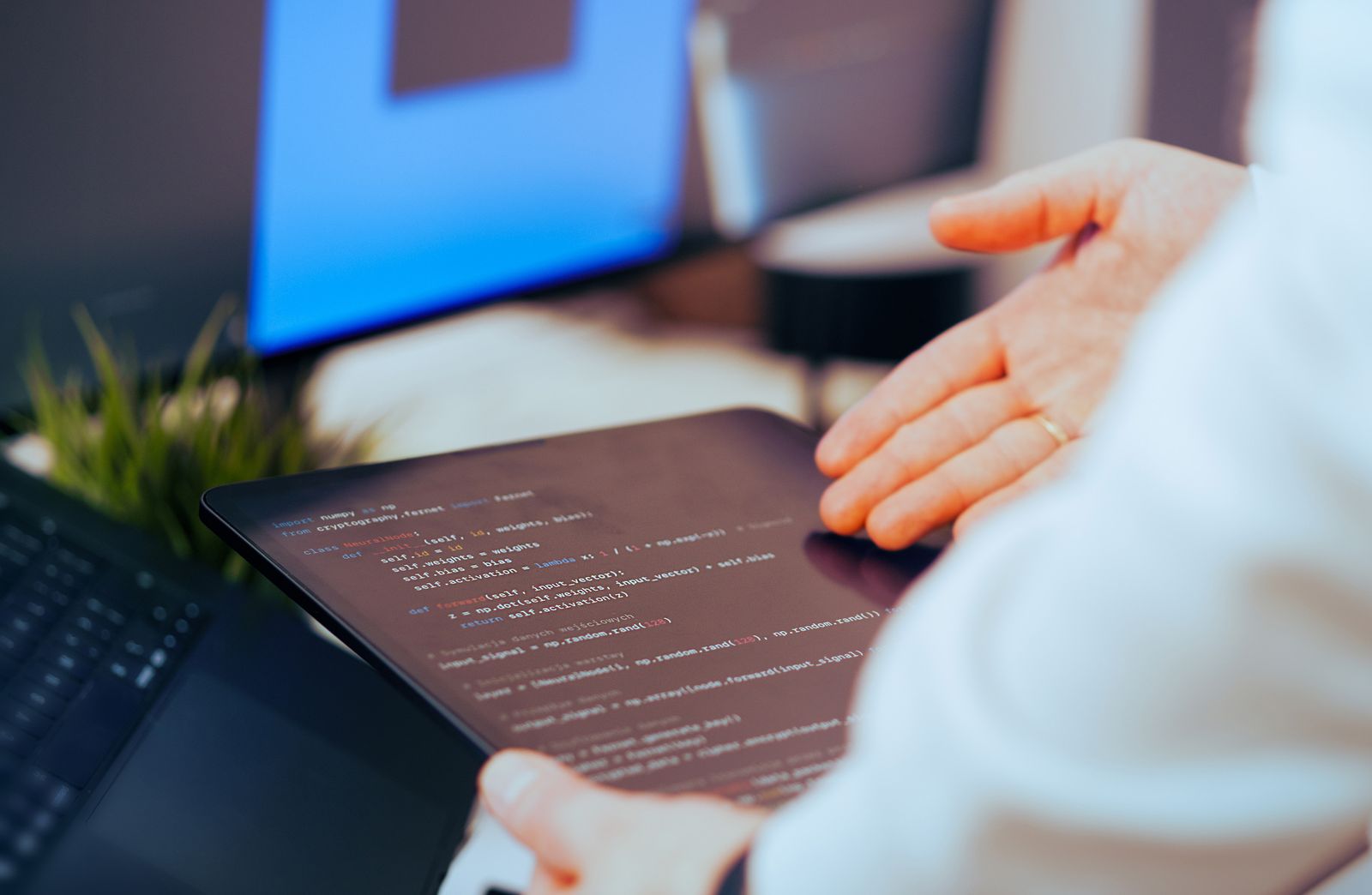
A code review looks at the code itself: structure, readability, error handling, dependencies and safe patterns. Not to criticise style, but to find where maintenance and security break down.
What it delivers
- Insight into vulnerable and hard-to-maintain code paths
- Assessment of dependencies and outdated libraries
- A priority list with evidence and impact
- Concrete improvements for review and release process
Where it goes wrong in practice
We combine a focused reading round with automated checks. Then we weigh findings by impact and recoverability, so the result is a priority list your team can actually execute.
A code review is not a judgment on the team. It is a technical snapshot of the code carrying the most risk. That is especially valuable in older software, where the original authors may no longer be available.
We look at code that touches money, access or critical data. We also assess how changes are tested and rolled back. That turns the review into a working tool for the team, not a report that disappears into a drawer.
The outcome is not a grade for the code, but a conversation about risk. We show which parts need attention first and which findings can wait. That keeps a review affordable and executable.
- Every change introduces new defects
- Nobody dares to ship a large release
- Dependencies have not been updated in years
- Review only happens when someone has spare time
Approach
From question to demonstrable result
We work in short steps with fixed deliverables. That keeps visible what is happening and what is still needed.
- 01
Define scope
We determine which repository, modules and risk areas are reviewed.
- 02
Read and measure
We combine manual review with static analysis and dependency checks.
- 03
Weigh findings
We assess exploitability, impact and the cost of remediation.
- 04
Hand over
We discuss the results with the team and record a practical review checklist.
Evidence
What you hold afterwards
- A review report with file locations and reasoning
- A priority list with impact and owner
- An overview of outdated dependencies
- A review checklist for future changes
Frequently asked questions
The question first, then the solution
Not seeing your question? Send a message with your situation. We respond with a substantive first answer.
Is a code review the same as a penetration test?
No. A code review looks at quality, structure and safe patterns. A pentest tests what an attacker can reach in the running environment.
How much code do you review?
That depends on risk and size. A focused sample of critical modules is sometimes better than a full scan of everything.
Do we also get a solution?
We provide concrete improvements and can guide remediation. Execution can remain with your team or supplier.
Can you review only a pull request?
Yes. For teams with an active release flow we can review changes, with the same emphasis on evidence and priority.
Related services
Often combined with
A technical question rarely touches one topic. These services often fit the same situation.
View all servicesWant to know what your situation needs?
Request an intake